Showing posts with label Labels. Show all posts

Tuesday, January 3, 2012

Extra Virgin Oil Fraud and the Small Producer

Pressing the olives at a local frantoio
        As we mentioned in our app, Olive Oil IQ, the best Italian extra virgin olive oil to buy comes directly from small local producers, the coltivatori diretti; or from a local olive mill, the frantoio.  If you can't travel to Italy to buy your oil, look for a specialized food shop in your own country, where you may build a relationship and taste the oils they stock. More and more olive oil boutiques and gourmet food shops are opening up around the world, offering excellent extra virgin oils from both the Mediterranean and the New World.
           
       Good quality extra virgin olive oil generally does not sell for less than six euros a bottle in Italy, and costs more in countries into which it has been imported. If you see extra virgin olive oil selling too cheaply, it's possible it has been mis-labelled. Even price-conscious consumers in Italy's big cities, who buy olive oil in supermarkets, fall prey to blended or lower quality oil. As the head of UNAPROL, the association of Italian olive oil producers, said in 2011, "The majority of Italians spend more for the engine oil for their cars than for extra virgin olive oil for their tables." 


       High price is no guarantee, though. You need to taste the oil before you buy if you can; if that's not possible, purchase the smallest container available. If it doesn't please you, don't buy it again and notify the vendor of your dis-satisfaction.  Look for another brand, read reviews, try and try again. This is what you would do with wine, isn't it?  


        Recently, there has been a talk in the press about labelling fraud concerning extra virgin olive oil, especially in products marked Made in Italy. (See the Mislabelling and Fraud entry in Olive Oil IQ). There is an ongoing government investigation in Italy, which focuses primarily upon large producers and corporations who have blended Italian olive oil with oil from Spain, Greece, Tunisia and Morocco and labelled their products 100% Italian. As a rule, this kind of fraud is not coming from the small farmers and oil producers, who work so hard to produce the top quality extra virgin olive oil that Italy is famous for; rather, it is on a much larger scale. 


     According to La Repubblica, the Italian newspaper (12/23/2011), this fraud investigation does not concern badly stored or expired product; it is focused instead on huge corporations across Italy and the EU who import enormous quantities of oil in bulk from Mediterranean countries and label it as Italian. The provenance may be on the label, as required by law, but you'll need a magnifying glass to read it. This is financial fraud on a gigantic scale, which is being actively investigated. La Repubblica broke the story and it has now circled the world. Unfortunately, sometimes the story has become less about the investigation of the international agri-mafia and more an indictment of Italian olive oil in general, which is unfair to the small producers.


Olive farmer watching his own new oil come from the press
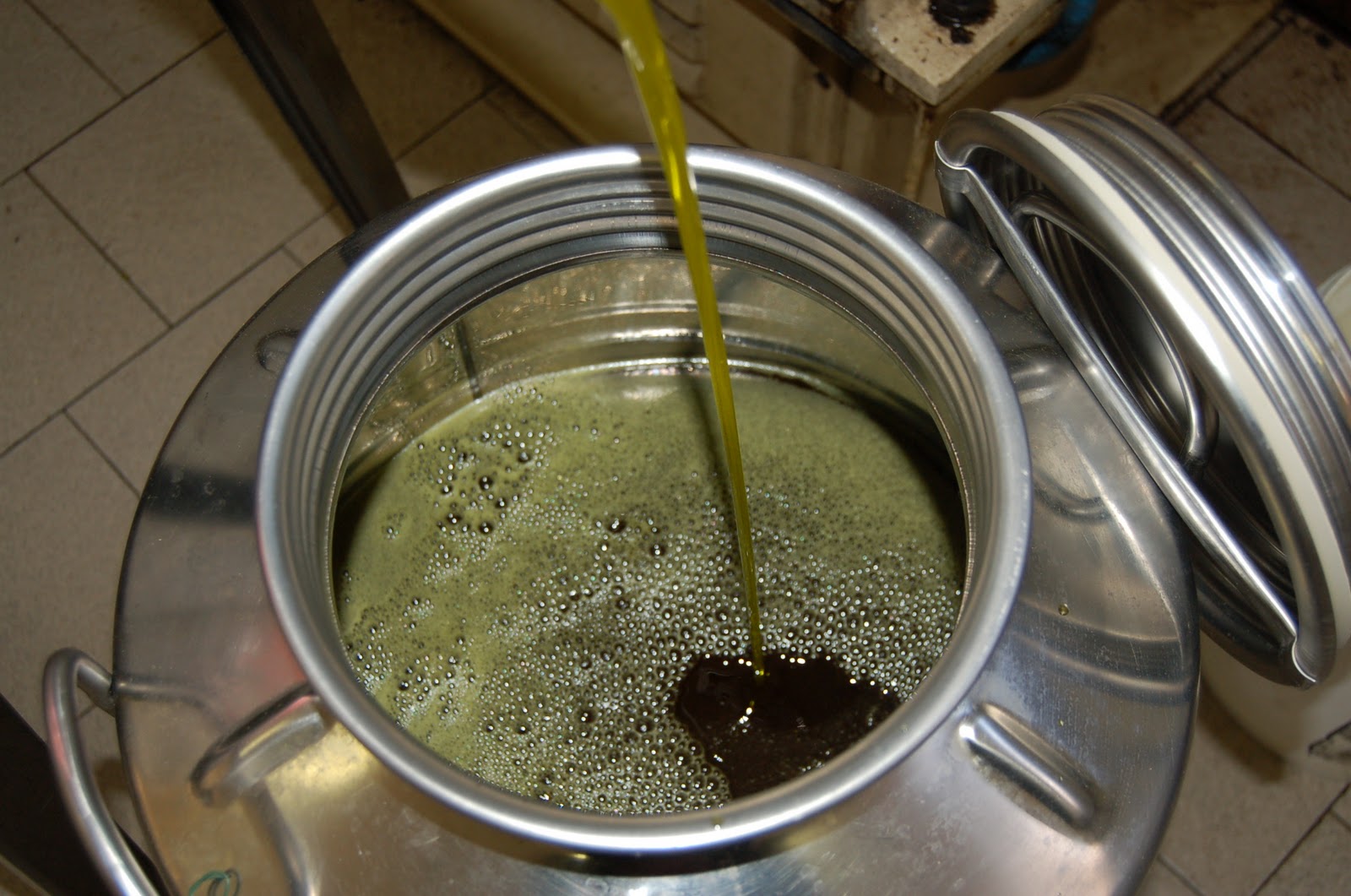
     As the frantoista (person who operates an olive oil press) near Saragano in Umbria told us, the small local producers must follow the EU and Italian government regulations to the letter when they press and label their oil. Otherwise, word will spread quickly that something is amiss and they will be shut down. Smalltime growers bring their olives to press and remain there watching their crop as the olives move from fruit to juice, eventually pouring into their own containers.


    This is the oil you want to buy.


copyright Sharri Whiting 2012


Sunday, December 18, 2011

US Regulations on EVOO

      I'm sitting here, marveling at our new green extra virgin olive oil, made from the olives that grow in our field, and I'm thinking about some recent comments online that all Mediterranean oil tastes alike. This is so not true.


       Like grapes, the taste of olives develops according to geography, soil, air, altitude, time of harvest, type of tree, and climate. So, my olives in Umbria will produce oil that tastes differently from somebody else’s in Liguria or Crete or Chile or California. 

        Unfortunately, many Americans, who often buy mass produced olive oil in the supermarket, have never had the chance to taste the really good stuff. The good news is that more olive oil specialty shops are opening across the US, as well as in France and northern Europe, making fresh oil more accessible. You'll find a whole section on tasting oils in my app, OLIVE OIL IQ.

        There's a lot of talk about fraud and certainly some of it is true. It's really important to read the labels, but it's even more essential to try the oils. Buying olive oil is a lot like buying wine -- find a label you like by trial and error. But, unlike wine, you don't want to buy "aged" olive oil  and you don't want to keep it longer than three months after you've opened it.

        In any case, when the regulations are lax, mis-labeling and fraud will seek the vacuum. In 2010, for the first time since 1948, the USDA revised its standards for olive oil, bringing them more closely in line with the standards adhered to by the International Olive Council and producers worldwide, including those in Spain, Greece, Italy, Portugal and Turkey. (The IOC is an intergovernmental UN agency representing over 95% of world olive oil production.)

        The US is not a member of the IOC and the new US standards are voluntary, not required. The changes were requested by the US olive oil industry in an effort to create fairness in the marketplace-- their position was that because there was no precise definition for categories of olive oil in the US, unscrupulous blenders have been producing low quality olive oil and marketing it as extra virgin olive oil at a premium price.  Hopefully, these standards will make a significant difference in the quality of imported and domestic oil available to Americans. 

        My Italian husband remembers living in Denmark as a teen-ager, back when olive oil was only available in small bottles in the pharmacies. Imagine an Italian family with five children struggling to make pasta with an eyedropper of oil. Mamma mia, what a tragedy.  Today, olive oil is available everywhere, some brands better than others. Getting the best is a joint venture that includes regulations on both the sending and receiving ends of the process, as well as involved consumers who are willing to educate themselves about the product they are buying.

copyright 2011 Sharri Whiting